FOR COUPLES
Understand Each Other Better.
Communicate With Greater Clarity.
Grow Stronger Together.
Discover how greater self-awareness can help you understand your differences, strengthen your communication, and build a more intentional, connected relationship.
Why Can Two People Who Love Each Other Still Misunderstand Each Other?
You can love each other deeply and still communicate very differently.
One of you may want to talk things through immediately, while the other needs time to process. One may communicate directly, while the other experiences that directness as criticism. One may value quick decisions, while the other needs more information and time.
These differences don't necessarily mean something is wrong with your relationship.
Often, they simply mean you are wired differently.
When you begin to understand the person behind the behavior, frustration can give way to understanding, communication can become clearer, and your differences can become strengths rather than ongoing sources of tension.
Self-awareness changes the conversation.
Understanding Your Differences Can Change the Way You Relate
Greater self-awareness helps you recognize not only how you communicate, but also how your spouse may hear and respond to you differently.
When you understand each other's behavioral styles, you can begin to:
- Communicate in ways your spouse can better receive
- Navigate differences and disagreements with greater understanding
- Recognize and appreciate the strengths each of you brings to the relationship
The goal isn't to become more alike. It's to understand each other better.
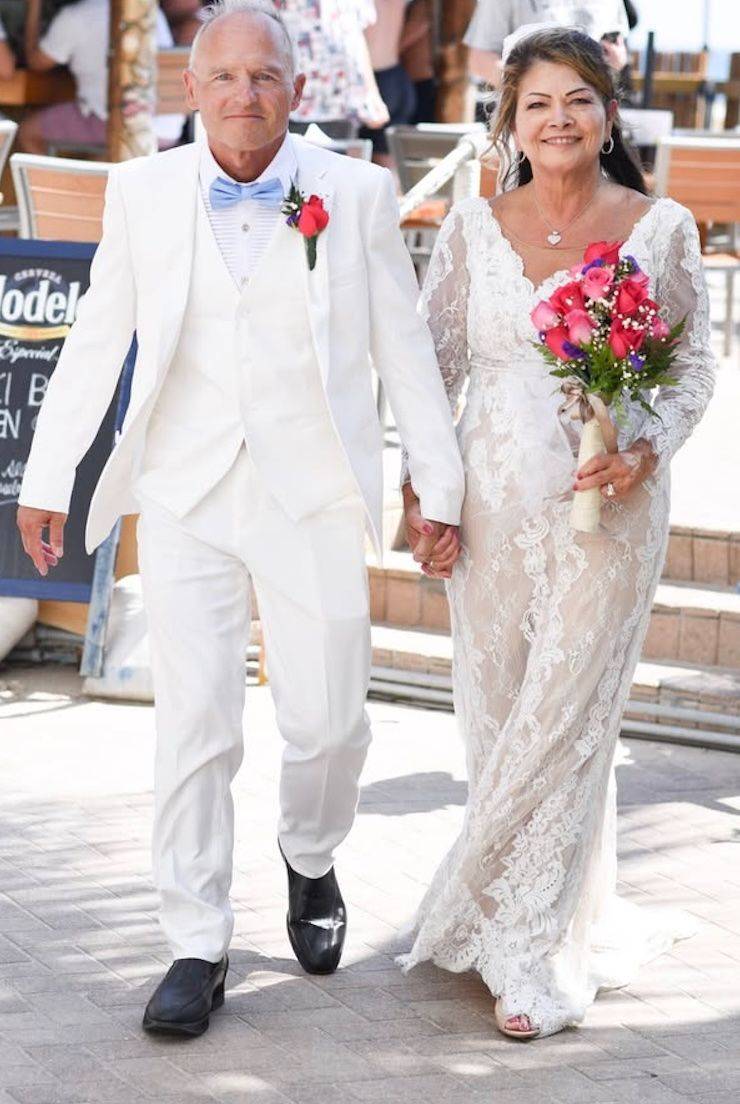


MEET GLENIS
Self-Awareness Coach • Human Behavior Strategist • Certified Human Behavior Consultant
Why This Work Is Personal to Me
Glenis McEwen Moss
My fascination with human behavior began long before I knew it had a name.
I was raised in a Christian home in Venezuela as one of seven sisters, and my father was a pastor. Even as a young girl, I noticed that although we were raised in the same home, we could experience the very same situation and respond to it in completely different ways.
That question stayed with me throughout my life:
Why do people who love one another sometimes understand the world so differently?
At 19, I married my boyfriend as I began a new chapter in the United States, where I had received a scholarship to study Nuclear Engineering at the University of Michigan.
We loved each other, but we were very different. He was warm, social, helpful, and people-oriented. I was driven, focused, goal-oriented, and determined to accomplish whatever I set my mind to do.
He thought I didn’t know how to have enough fun. I thought he didn’t get enough done.
Looking back, I can smile and say: we were both right. We were simply seeing life through the lens of how we were naturally wired.
After 15 years, our marriage ended in divorce.
Three years later, I married an extraordinary man who was kind, respectful, encouraging, and deeply supportive. We shared more than 21 happy years until he passed away unexpectedly, and I suddenly found myself a widow.
Through all those seasons, one question continued to intrigue me:
Why can we connect so naturally with some people, while communication with others feels so much harder?
That same question followed me throughout my professional life. With degrees in Nuclear Engineering, a career in corporate leadership, experience as a vice president beginning at age 29, and nearly two decades as an international entrepreneur, I saw again and again that technical expertise alone did not determine how well people worked together.
Understanding people mattered.
A little over five years ago, I was introduced to the DISC model of human behavior, and suddenly so much of what I had observed throughout my life had a framework and a language.
I became a Certified DISC Profile Analyst and later a Certified Human Behavior Consultant, and I began using DISC and self-awareness in my coaching.
Since then, I have worked with engaged couples, married couples, individuals, corporate teams, group coaching participants, and one-to-one coaching clients to help them better understand themselves, communicate more effectively, and navigate relationships with greater clarity.
After four years as a widow, I remarried. This time, I entered marriage with a much deeper understanding of myself—my personality, values, communication patterns, and needs—and a greater appreciation for how another person can be wonderfully different from me.
Today, my husband Gary and I have been happily married for more than three years.
Self-awareness doesn’t make two people the same. It helps them understand and appreciate who each person already is.
Today, as a Self-Awareness Coach and Human Behavior Strategist, I bring together decades of life experience, leadership, entrepreneurship, coaching, and human behavior training to help people better understand themselves and the people who matter most to them.
After a lifetime of relationships, leadership, loss, new beginnings, and love, I have learned something I wish I had understood much earlier:
Sometimes the person you’re struggling to understand isn’t trying to be difficult. They may simply be wired differently.
And when you begin to understand the person behind the behavior, the way you communicate—and the relationship itself—can begin to change.
|